
Showing posts with label producers. Show all posts
Showing posts with label producers. Show all posts
Friday, March 4, 2011
Lawa young man at work
Lawa young man making silver ring. He is a representative of Lawa sliver producers in La Oop village.

Ban La Oob Village
Ban La Oob Village
The Lawa live in villages in two provinces of northern Thailand, Chiang Mai and Mae Hong Son, and have a population of about 16,000 people. They traditionally supported their families by engaging in slash-and-burn agriculture, but need now other sources of income as the old way of agriculture is no more possible.
TTC has started working with Ban La Oob villagers since 1996. This village is about 250 kilometer away from west of Chiang Mai locating in Mae La Noi district of Mae Hong Son province. They make beautiful silver work and black hand-woven cloth with tie-dye designs. There are 12 producers, all men) of silver jewelry items, such as earrings, bracelets and necklaces, and about 20 weavers, all women, who weave black cloth with tie-dye designs which TTC makes several products, such as, Vests, Purses, Small Accessories, Travel Bags etc….

The Lawa live in villages in two provinces of northern Thailand, Chiang Mai and Mae Hong Son, and have a population of about 16,000 people. They traditionally supported their families by engaging in slash-and-burn agriculture, but need now other sources of income as the old way of agriculture is no more possible.
TTC has started working with Ban La Oob villagers since 1996. This village is about 250 kilometer away from west of Chiang Mai locating in Mae La Noi district of Mae Hong Son province. They make beautiful silver work and black hand-woven cloth with tie-dye designs. There are 12 producers, all men) of silver jewelry items, such as earrings, bracelets and necklaces, and about 20 weavers, all women, who weave black cloth with tie-dye designs which TTC makes several products, such as, Vests, Purses, Small Accessories, Travel Bags etc….
Tuesday, March 1, 2011
Lisu New Year Celebration
A group of Thai Tribal Crafts producers from Lisu tribe celebrating their New Year. The celebration held in Ban Sri Dong Yen, Mae Rim district, Chiang Mai. Traditional dancing, traditional singing as we as other activities presenting during the ceremony.
There are approximately 38,299 Lisus living in Thailand. The Lisu of northern Thailand make their clothing from coloured cloth stitched into outfits trimmed with row upon row of multicolored stripes of cloth, applique patchwork, tassels, and beadwork. The wealthier wear massive amounts of hand-crafted silver ornaments for festive occasions. Lisu men produce crossbows, bird and animal traps, musical pipes and bamboo flutes.
Monday, February 28, 2011
Mae Muang Noi (Lahu) Village
Ban Muang Noi is a Lahu Na Christian village located in Mae Ai district, Chiang Mai province and it is about 195 kilometers away from Chiang Mai city. The village was set up about 35 years ago and there was no public services at the beginning and the village could be reached by walking from the highway about 25 kilometer from the village. The village has 105 households with a population 750 people, 275 men, 325 women and 150 youths and children. TTC started working with the artisans of this village 20 years ago. The items made by these artisans includes Shoulder Bags, Plain cloth of various width and length, Pattern woven cloth, Christmas runners and wall hanging made of hand woven cloth on back-strap loom.
Currently, the village can be reached by car all year round and living condition is much better now. Each household has a limited size of land that the can grow rice, corn and beans but their earning from agriculture is not enough for all year round. Therefore, villagers need supplementary income. Some of them go to work in different cities in Thailand. About 80% of the village income is from agriculture, 10% from sales of handicrafts, all sold to Thai Tribal Crafts and 10% from others.
Villagers are busy working in their fields from May through July. Then they will be free from agricultural activities from August to middle of October. Busy again for harvesting from middle of October through the end November. Most of villagers are free from field activities during the period from December through April. Therefore, the artisans normally work on handicrafts during this period.
Thai Tribal Crafts team..
Tuesday, November 30, 2010
Lana Cafe
Lanna cafe is a non-governmental organization (NGO), initialted in 2001 by Wakachiai Project, NOG which has been importing coffee (in accordance with the fair trade standards) from Hilltribe growers in Northern Thailand (Lanna) since 1997.
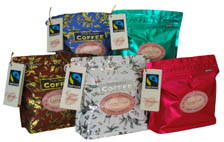
The objective is to introduce high quality Thai Highland coffee to more people, not only in Thailand, but worldwide, and to assist the coffee producers of the Thai Hill tribes who do not have direct access to the market. All of the coffee is purchased directly from the growers group (Thai Tribal Highland Arabica Coffee Production and Marketing Cooperative), and certified by FLO (Fairtrade Labeling Organizations International).
Lanna cafe is a member of Thai Tribal Highland Arabica Coffee Production and Marketing Cooperative to establish Lanna Cafe. The cooperative is facilitated through the Integrated Tribal Development Program (ITDP); a Thai based NGO working with Thai Tribal group and is a member of Fairtrade Labeling Organizations International (FLO). Strict quality control measures are undertaken by the cooperative. Berries are hand picked and optimum maturity, wet processed and sun dry by the producer in their villages. Dry bean are hulled and graded by machine and culled by hand to insure a high quality superior flavored product. The roasting and packaging of Lanna cafe is continuously monitored to maintain quality. Lanna cafe supports sustainable indigenous farming to promote local development in Thailand Hill tribe villages.
For more infomration : http://www.ttcrafts.co.th/lannacafe/index.html
Thursday, November 18, 2010
Wong Wiang Handicrafts, one of TTC cooperative parnter
Wongwiang Handicraft was established in 1987 by Mr. Oun Wongwiang and his friends, who were leprosy patients at McKane Rehabilitation Centre www.mckeanhosp.org Chiang Mai which was founded by Dr. James McKean (1860 - 1949), one of Presbyterian missionaries from the United States and a handful of western physicians working in Chiang Mai to help and develop western medical clinic in this region.
After recovering from leprosy illness, Mr. Oun Wongwiang and his friends realized the hardship and poorness of former leprosy patients and started to generate their ideas to implement handicrafts business which they learned while they were in McKane Rehabilitation Centre. It was aimed to improve the life quality and living standard of ex-leprosy patients and their families by providing vital and sustainable incomes through the sales of handcrafted woodcarving products.
Eventually, the group has been developing their skills and productivities in making handicrafts to match with the global market needs. Today, with the experiences of more than 20 years, 20 families of former leprosy patients who are living in villages around Chiang Mai, Lampoon and Lampang provinces are involving in this Wongwiang Handicraft projects.
Objectives:
1). To provide stable works to former leprosy patients by developing woodcarving handicraft skills which they learned from McKane Rehabilitation Centre so that they can do handicraft business.
2). To improve the quality and living standard of former leprosy families by having more productivities and regular incomes.
3). To promote Thai handicrafts products (woodcarving items) and find international markets to export their products.
You will find above satisfaction and enjoy having their beautiful woodcarving handicrafts when you purchase. It will be a great helpful for children to go to school; someone to obtain medical care and your purchase will always contribute to the rise of living standard of the people who were once leprosy patients.

Tuesday, November 16, 2010
TTC Work At Huay Ja Khan Village
Huay Ja Khan Village, Chiang dao District, Chiang Mai Province
 |
| Huay Ja Khan Village |
There are several public services now. The road to the village is paved, piped water supply and electricity is available. There is a primary school with 320 students, 12 teachers. Children from nearby villages are also attending this school. There is a student hostel supported by the Compassion International. There is a clinic but there is no fulltime health worker.
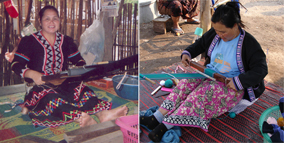
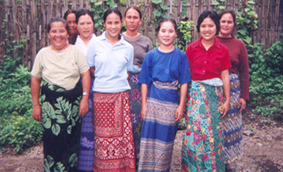
Each household has a limited size of land that the can grow rice, corn and beans but their earning from agriculture is not enough for all year round. Therefore, villagers need supplementary income. Some of them go to Chiang Mai city to work at different places, such as daily labor at the construction sites, Restaurants, Karaoke etc, and some remain in the village and involving crafts making, such as 25 producers whom TTC is supporting. Agriculture is still the main job for the villagers and 50% of family income is from agriculture products and domestic animals, 30% from labor and 20% from sales of handicrafts. Out of the income from handicrafts sales 79% from TTC and 21% from annual handicrafts sale to the Royal Project.
About ten households have no land for agriculture and their income is mainly come from the wage of daily labor. As for TTC producers, they have no market beside TTC. Quality control is done by individual producer in accordance with the instruction of TTC buyer. They have problem of fund to invest when they receive order for quantity weaving. Color availability is some time a problem for producers. If the order is too small it effect the travel expenses of the producers. To summarize TTC have to work closely with producer group to help solve their problems.
 |
| Huay Ja Khan Producers Group |
Friday, November 5, 2010
TTC Village training on Hmong traditional handmade Batik
This training held among the producers called Huay Luk group, a women group of Hmong tribe who are living in Huay Luk village, Chiang Dao district, Chiang Mai province. The village which is located in the north of Chiag Mai city, approximately
Monday, July 12, 2010
Ban Phui, Karen handicraft producers in northern Thailand
Ban Phui (handicraft producer group) is one of the Karen villages in northern Thailand which is about 160 kilometers south west of Chiang Mai city in Hod district. People living here are known as Pow Karen and men are skilled in making traditional musical instruments made of wood such as Karen Drum, Harp, Guitar and variety of baskets. READ full story >>>
Their handmade products are available to purchase at Thai Tribal Crafts Fair Trade shops and can export to overseas.

Their handmade products are available to purchase at Thai Tribal Crafts Fair Trade shops and can export to overseas.
Figure: Some handmade products by Ban Pui group
Wednesday, June 30, 2010
Doi Wiang, Lahu hilltribe and Fair Trade producers in Thailand
Ban Doi Wiang is one of the beautiful Lahu hilltribe villages located in Mu 18, Tambol Sridongyen, Amphur Chai Prakarn, Chiang Mai. It is about 170 kilometer away from Chiang Mai city and Thai Tribal Crafts Fair Trade has been working with this handmade producer group since 1986 in order to promote their traditional products especially basketry. Read full story:

Monday, April 19, 2010
Mien or Yao, Handicraft producers from northern Thailand
Mien or also called Yao is one of the hill tribes living in northern Thailand. Among Mien different villages, Ban Mae Kae village has been working with Thai Tribal Crafts Fair Trade since 2003 in producing high quality handmade. Today, their handicrafts products become one of the best sellers in both local and export markets.

This village is situated in Ngao district of Lampang province about 190 kilometers east of Chiang Mai. It is a Mien (Yao) village composed of 80 houses with a total population of 400 people. The village is accessible by car in dry seasons and only four-wheel driver car can reach the village. The adults who can speak and understand Thai are less than 60% but children and young people can read and write as they can go to the local government schools for formal education.

Some of Mien handicrafts producers
This village is situated in Ngao district of Lampang province about 190 kilometers east of Chiang Mai. It is a Mien (Yao) village composed of 80 houses with a total population of 400 people. The village is accessible by car in dry seasons and only four-wheel driver car can reach the village. The adults who can speak and understand Thai are less than 60% but children and young people can read and write as they can go to the local government schools for formal education.
Some of Mien handmade products
Wednesday, March 31, 2010
Akha hill tribe village, Ban San Pa Sark
Thai Tribal Crafts has been working with more than 58 villages and Akha hill tribe village, Ban San Pa Sark is one of them. It is located at about 250 kilometer northeast of Chiang Mai city. The village has 80 households with a total population of 250 persons, 190 female and 60 male. The population is composed of 15% Christian, 25% Aminist and 60% Buddhist. 20 percent are illiterate, 90% understand Thai and less than 40% can write. For more information, please click here or click on the image.

Tuesday, February 2, 2010
Fair Trade Shop in Chiang Rai will be soon
To bring more Fair Trade awareness in Thailand and in order to extend our Fair Trade shops, we are thinking of having new Fair Trade shop in Chiang Rai, northern Thailand. This will be a join program of Akha Craft in Chiang Rai and Thai Tribal Crafts Fair Trade, though it's not finalized yet.
By opening new shop there, we hope our local sales will increase and providing more job opportunities to Akha hill tribe and all other groups who have been joining with us. At the same time, Tourist, visitors and local people have more chances to purchase Fair Trade products in Chiang Rai.


Sunday, January 31, 2010
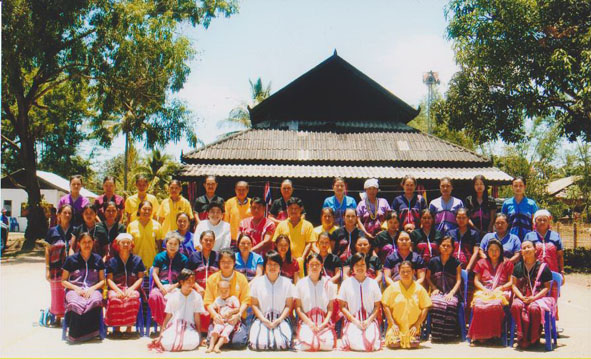
Huay Dtom Handicraft Research Center and Thai Tribal Crafts
Thursday, January 28, 2010
Handicraft Producers: Ban Pa Du - Akha village in northern Thailand
Ban Pa Du is an Akha village located at about 240 kilometer northeast of Chiang Mai city. The village has 92 households with a total population of 530 persons, 280 female and 250 male. The population is composed of 45% Christian, 45% Pantheist and 5% Buddhist. Seventy percent are illiterate, 30% understand Thai and less than 30% can write.
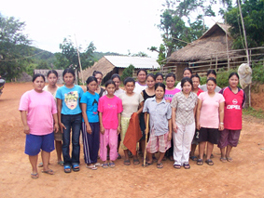
Majority households have not enough land for cultivation, only 10% of the whole villagers have land for agriculture and wages of labor is the main source of income for the village. TTC has worked with a group of 5 men who make the Akha musical instrument called "Akha Jews Harp" since 1985. Beginning of this year the village women requested Thai Tribal Crafts to help them, and we surveyed the village in June 2005 and decided to help the women by providing work of making embroidery pieces which we use to make several products, such as Purses, Bags of different sizes and design of export quality. There are 21 women with whom we are working now.
Monday, December 21, 2009
Handicrafts producers: Ban Pa Mai Pattana Village, Thailand

The Department of Forestry in Thailand announced Doi Luang as the National Park and the Akha villagers living in the forest were moved from their village to this place in 1992. Each family was provided a piece of land ( approx. 800 square meters) for residence and another piece of land ( approx. 2 acre) for agriculture. Villagers grow pineapple. For details: Please CLICK here.
Sunday, December 6, 2009
Hill Tribe People in northern Thailand and their handicrafts
 There are mainly 7 hill tribes people such as Akha, Hmong, Karen, Lahu, Lawa, Lisu and Mien who are living in northern Thailand though there are very few number of Kachin and some others. Most of the hilltribe people love nature and prefer to live on the mountain side peacefully.
 Traditionally the tribal people have supported their families by engaging in slash and burn agriculture, which required them to move their village every few years in search of new fields when old ones lost their fertility. It is now no longer possible for them to continue this semi-nomadic lifestyle, as there are no new places to move on to.
Today, they are trying support their family by selling their rich culture and skillful in handicrafts. They can make different kinds of handmade products and each patterns or products has its own interesting story. As part of our missions, we are trying to help them in promoting and finding market for their beautiful handmade products. If you are interested to visit to their villages or interested to buy their products in order to support these people, please kindly contact us.
Thursday, December 3, 2009
Fair Trade Tour to Chiang Mai, northern Thailand

A number of tour packages will be created involving various producers’ villages. The first package has been developed with Mae Gapiang village. For more information, please contact us.
Subscribe to:
Posts (Atom)